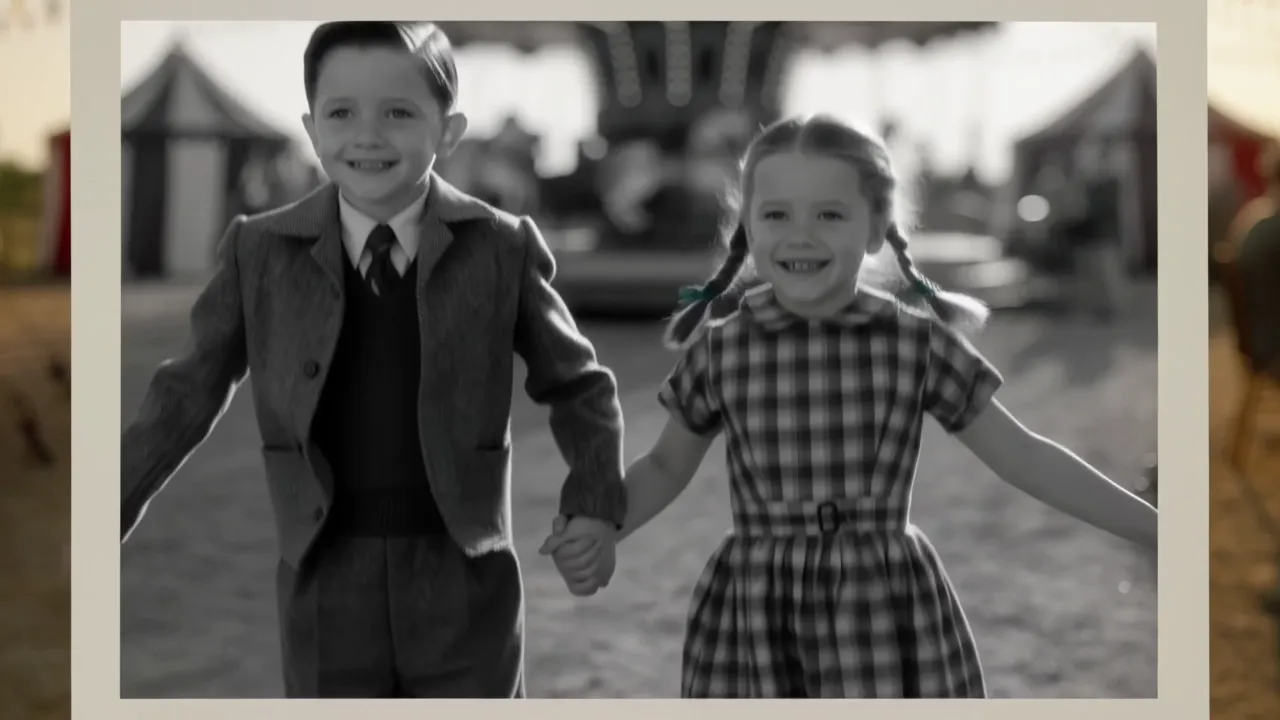
Help your parents enjoy the memories that make them who they are.
Load family photos from your phone. Mum or Dad talks about the days they know best—calm, at their own pace, all on their own—and their own voice is saved with every photo.
Lift your mood and keep your mind active—just by talking about your photos.
Pick a photo from your life and answer gentle spoken questions out loud. No typing, no menus, no wrong answers. Your story is saved in your own voice as you go.
Calm reminiscence therapy—without the prep or burnout.
When short-term memory declines, everyday questions can feel tense. Open a photo from earlier decades on the tablet in their room or the phone in your bag, and let open-ended voice questions guide a warm session—together or while you rest.
Personal reminiscence therapy for residents—even in their own room.
Group activities only reach a few people, and specialist one-on-one hours are scarce. Give residents a simple, voice-guided tablet with photos from their own life. It works on their own or with a carer, there is nothing to write up, and every conversation is saved on the resident’s own timeline.
Try a free 2-minute conversation. No account needed. Pick a photo from the 1960s to the 1980s that means something to you. How it works
See an example
See how a reminiscence session unfolds.
A garden walk — silent preview at four times speed; words appear on screen as
they are spoken. Watch with sound
What was said in this session
Asked: Hello — let’s have a look at this one together. Who were the people walking with you, and how did you know them?
Answered: Oh, yes, that was one of our garden outings. I’m the one on the left, with the pink handbag. I’d forgotten how bright that thing was. We used to go out together whenever we could manage a free weekend.
Asked: What do you remember about the weather and the feel of that afternoon?
Answered: I think it was one of those big old gardens up in the Southern Highlands. I couldn’t tell you which one now. There were enormous trees, and the gravel crunched underfoot. It felt a long way from the traffic.
Asked: What had you and the others been talking about as you walked?
Answered: The man in the dark jacket is Peter, from the walking club. Then there’s Margaret beside me in the long white skirt. Bill is the one in the straw hat. We weren’t a racing sort of group. Someone was always stopping to look.
Read the rest
Asked: What is the first memory that comes back when you look at these people walking ahead?
Answered: Mary, actually. I’ve mixed them up. Margaret was my neighbour, but Mary is the one in the white skirt. Mary was very patient with me when my knee played up. She’d stop and pretend she wanted to look at a flower.
Asked: That’s a lovely thing to remember about her. Where were you headed when this picture was taken, and what happened when you arrived?
Answered: I was going to say 2012, but no, it was 2011. It was before we moved house. Early summer, perhaps, though I wouldn’t swear to the month. The long grass hadn’t been mown.
Asked: What did you do after leaving this path?
Answered: We met at the front gate while it was still cool. I had a thermos of tea and kept warming my hands around the cup. Peter was checking we all had hats and water. He did that every time, even though we were grown adults.
Asked: Tell me about Peter, the one checking you were all prepared — what part did he play in the day?
Answered: Bill carried the paper map of the gardens, folded up small. He didn’t trust the little signposts. He’d hold the map behind his back like a schoolmaster to make us laugh, but he was careful about checking each turning.
Asked: It sounds like he brought a lot of joy and safety to your walks together.
Answered: That was my daughter, Lucy. She’d come along for the day and had dropped behind to take pictures. I remember her calling for us to keep walking. She didn’t want everyone turning round and grinning at the camera.
Asked: It sounds like you have a wonderful memory of an important day with your daughter.
Answered: That white skirt really stands out against all the green. I know I got myself muddled a moment ago. Before I go on, can you remind me who was wearing it, and which year I settled on for the walk?
Asked: Of course. You mentioned that Mary was wearing the white skirt and that the walk took place in 2011.
Answered: Far too much, as usual. A cardigan, a spare pair of glasses, sunscreen and a little first aid kit. It weighed a ton. Lucy said I was prepared to move into the gardens rather than walk through them.
Asked: That’s quite a collection to carry along for a stroll. It sounds like you were ready for just about anything that day.
Answered: Cheese and tomato sandwiches, wrapped in greaseproof paper. The tomato made the bread a bit soggy by lunchtime. Bill joked that he’d brought boiled eggs for everyone, but he was only teasing. He knew I couldn’t stand the smell.
Asked: Where did you eventually stop to eat those sandwiches in the gardens?
Answered: We found a long wooden bench under one of the big trees. I sat on my folded cardigan because the wood felt damp. Lucy passed around some mandarins, and we tucked the peels back into our bags.
Asked: That paints such a lovely picture of your afternoon together. It sounds like it was a very peaceful and happy day.
Answered: Mostly the wind moving through the leaves. There was a bird calling somewhere in the shrubs, but I don’t know what kind. I’m no good at bird names. For a little while nobody spoke, which was quite unusual for our lot.
Asked: It sounds like those moments of quiet together were just as special as the conversations.
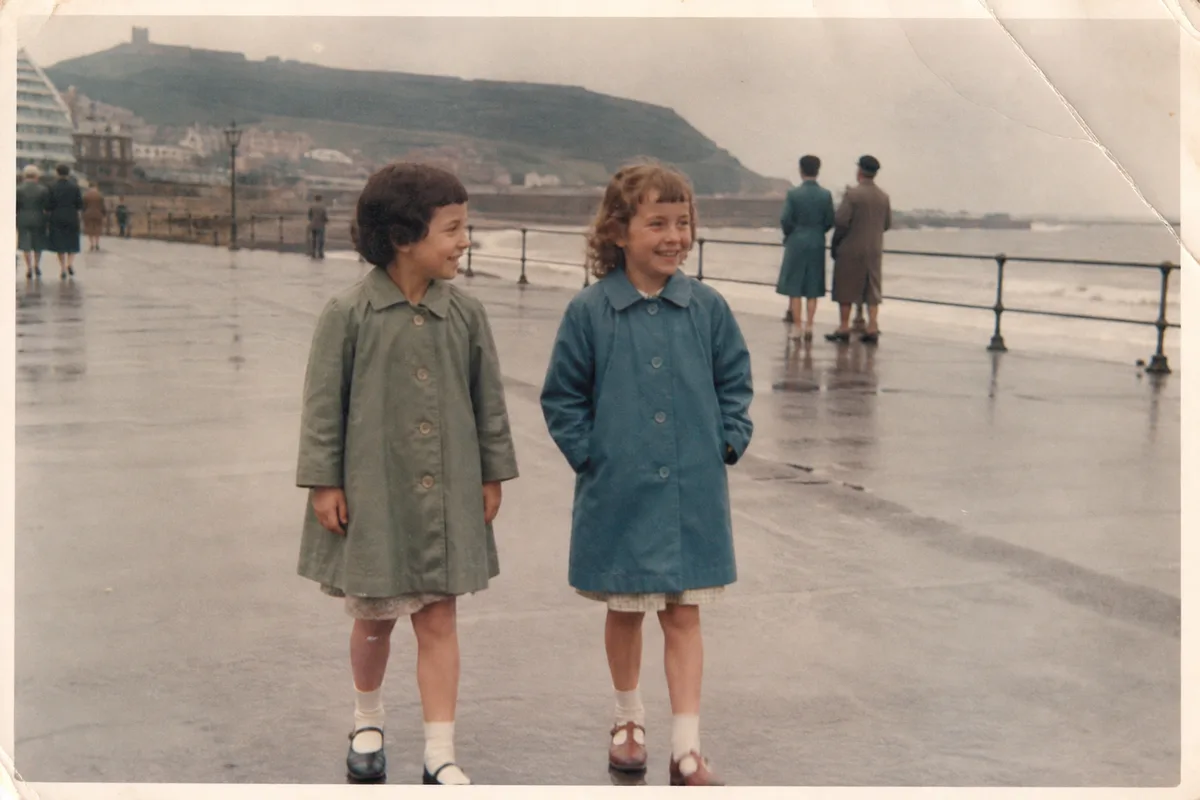
An illustrative example about a seaside photograph. Not a customer’s words.
Our voice assistant:
Who took this photograph?
My father. He had a little box camera. It poured all week and none of us minded.
Supporting wellbeing comes first; archiving your story is the natural side-effect. An
older adult can pick up a tablet and enjoy a session on their own, with no typing and
no complicated menus.
01
Bring in a photo—from anywhere.
Choose from your device or photo gallery, or snap a printed album photo with your camera. Pick one yourself in a tap, or let family load photos ahead of time.
02
Talk about it—open-ended, no judgement.
Our voice assistant looks at details in the photo and asks gentle, open-ended questions out loud. No helper is needed beside you, nobody corrects dates, and you can skip any question.
03
Your story, saved as you go.
Your spoken memories and voice are saved alongside each photograph, like a narrated slideshow of a life.
Everyday scenarios
How individuals, families, and care teams use it
Illustrative ways people fit photo-led reminiscence into everyday life.
When recent memory slips
Replacing tense questions with confident stories
“Asking about yesterday only caused frustration and suspicion. Opening photos from Mum’s 1960s nursing days meets her where her recall is vivid, proud, and relaxed.”
Spousal caregiving · Respite
Thirty peaceful minutes without caregiver guilt
“Juggling round-the-clock care is exhausting. While my husband chats out loud about his old workshop and classic cars, he gets genuine stimulation and I get half an hour to rest.”
Moving into residential care
Keeping identity alive in a new room
“Moving Dad into a care facility came with heavy guilt. Loading his Navy and wedding photos meant he still had his own life stories in his room—and staff got to know who he really is.”
Independent memory habit
Keeping recall active twice a week
“I live alone and want to keep my mind engaged. Twice a week I photograph an old print from a shoebox and talk through the day. My grandkids will have the stories in my own voice.”
Care facilities · 1-on-1
Reaching residents who skip group activities
“Group bingo only suits a handful of residents. Opening one hometown photograph in a quiet resident’s armchair sparks twenty minutes of warm storytelling with zero preparation.”
Published evidence
What the research says about reminiscence therapy
Memories from youth and mid-life often stay reachable long after recent recall fades.
Decades of research into reminiscence point to what regular, low-pressure sessions can
support:
Cognitive function
A 2025 meta-analysis of 14 randomised controlled studies found reminiscence therapy significantly improved cognitive function in older adults with cognitive impairment, most of all in mild impairment. Benefits are shown across group and individual formats.
Across pooled randomised trials, reminiscence therapy works as a steady weekly habit rather than a one-off event. Typical programmes ran 30 to 45 minute sessions, 1 to 3 times a week, over 4 to 12+ weeks. They improved quality of life and eased depressive symptoms.
The Cochrane systematic review of 22 randomised trials (1,972 participants) found some evidence that reminiscence improved quality of life, communication and cognition in care-home settings, with individual sessions supporting cognition and mood.
Talking through personal memories with visual cues helps reduce isolation, anxiety, apathy, anger, and moderate depression in people living with dementia.
Sharing life stories reinforces self-worth, pride, and personal identity—and helps family members and care teams see the whole person behind daily care routines.
These studies evaluate reminiscence therapy broadly, not Reminisce Road specifically. We
haven’t clinically tested our own product—Reminisce Road is an everyday, non-clinical tool
that makes regular photo-led reminiscence simple to practise.
It runs in the web browser on a tablet, phone or computer, so there is nothing
to install. Answer the way you’d tell a friend: the point is lifting your day,
not passing a test. Talk for a few minutes or much longer. Each conversation is
kept with its photo on your timeline, where you can play it back later.
Tap a photograph and talk out loud. Nobody needs to sit beside you.
Keep the person you love present—even as recent memory changes.
Watching a parent slip away in daily conversation is deeply painful. As everyday
talk shrinks to logistics, this is where the long memories still live. And the
voice you save now is one your family keeps.
Care-staff guidance recommends photographs from earlier decades. Load them once,
and Mum or Dad can enjoy photo conversations without anyone sitting beside them.
On your phone or gallery.Pick favourites from your device and add them.
In a shoebox or album.Snap the print with your camera. Nobody needs to know the year.
One job every sibling agrees on: choosing the photos.
Warm, calm connection—without caregiver burnout or prep.
A sight, a sound, or an old photograph unlocks calm long-term memories without
the tension of short-term quizzing—giving caregivers a gentler afternoon or
thirty peaceful minutes to recharge.
Zero preparation
Photos are ready and open-ended questions are prepared automatically.
Together or solo
Share a warm chat beside them, or let them enjoy a calm session while you take a breather.
No confrontation
Gentle prompts tap long-term recall—never testing facts or triggering frustration.
Nothing to write up
Their spoken story is saved on their timeline, not yours.
Personal reminiscence therapy—even for residents who skip group activities.
Group sessions reach the same few people, and specialist 1-on-1 hours are
scarce. Residents can enjoy a signed-in tablet independently in their own room,
or start a session in seconds with a carer, nurse, or volunteer.
And when residential care comes, the photos move too: their own life stories in
the new room, and staff who know who they really are.
You can
Set up facilities, wings, wards and branches
Add your care and lifestyle staff
Add personal photos for residents
You can’t
See their photographs
Read what they said
Play their recordings
That includes administrators.
For care teams
No training needed. A carer, nurse or volunteer starts a session in seconds.
The session record lands on the resident’s timeline, not your progress notes.
Staff accounts cannot see photographs, words or recordings.
Dementia Support Australia’s guidance highlights that telling and hearing
personal stories builds pride, calms distress, and protects a sense of identity.
Straight answers about who it suits, how a session works, and what happens to your
photos.
What stage of memory loss is this for?
Photo-led reminiscence works off long-term memory: the decades that stay reachable even when yesterday is hard to find. Published research shows the strongest effects in mild to moderate impairment, and there is nothing to pass or fail. If a question doesn’t land, it can be skipped. If your relative can still enjoy a photo and a chat, they can use it.
What is reminiscence therapy, and is this a medical tool?
Reminiscence therapy uses personal photographs and life stories to support mood, quality of life, and long-term recall when recent memory is declining. Reminisce Road is an everyday, non-clinical tool that makes photo-led reminiscence simple at home or in a care facility—not a medical device or diagnostic test.
Does someone need to sit beside my parents to help them use it?
No helper is needed. Once signed in on a tablet or computer, they simply tap a photograph and talk out loud. There is no typing, no reading required, and no complicated menus. That gives family caregivers peace of mind and time to rest.
How long and how often should someone do a reminiscence session?
Published reviews of reminiscence therapy typically run 30 to 45 minute sessions, one to three times a week over four to twelve weeks. Even two short 15-to-30 minute sessions a week is a sustainable, uplifting habit.
Is there a person on the line?
No. It’s a voice assistant that looks at details in the photograph and asks open-ended follow-up questions based on what was just said.
What if they get a detail wrong, or a memory feels sad?
It doesn’t correct them, score anything, or run a memory test—what matters is reliving the memory without pressure or judgement. If a question touches on a sad moment, they can skip the question or stop whenever they like.
How are the spoken memories kept as a time capsule?
While they talk about a photograph, their spoken words and voice recording are saved alongside that photo on their timeline—like a narrated slideshow of their life, captured naturally as a side-effect.
Where do our photos and recordings go?
Photos and conversations are used only to run your sessions: never for advertising, never sold. While a conversation runs, the providers behind our voice assistant process the photo and what is said so it can listen and reply. We name every provider and what it does, in plain words, in the privacy policy.
Can siblings or care-facility staff read what our parent said?
Not unless they show them. Everything stays on their own sign-in. Family and care-facility staff accounts don’t get their words or recording automatically.
Do I need a password?
No. Sign in with a one-time email code or Google, or pick up a tablet that’s already signed in.
What happens when someone dies?
We’re still building that part, and we won’t promise what doesn’t exist yet. Today, everything saved stays exactly as it is, and you can write to us through the contact page about a family member’s memories.
Support networks and practical reminiscence guides.
Navigating memory loss, family dynamics, or caregiver exhaustion takes real support.
Start with helplines, carer groups, and our articles on photo-led reminiscence.
Community directory
Helplines, carer groups & memory cafés
A hand-checked starting list of helplines, carer groups and memory cafés.